Discover how Lightstar HMIs deliver efficient, daylight-balanced lighting for film and video production. Learn key specs, ballast differences, lamp care, and on-set considerations.
Help production teams decide if Lightstar HMIs fit their lighting needs and how to plan their use from pre-production through post.
Why Choose Lightstar HMIs for Your Production Lighting?
When planning your lighting package, understanding the balance between quality, efficiency, and budget is crucial. Lightstar HMIs offer a compelling option for productions seeking daylight-balanced, high-output lighting without the premium price tag of legacy brands. Originating from a trusted Chinese manufacturer with a growing presence in Asia and now available in the U.S. through Ikan, Lightstar’s HMI fixtures range from 200W to 24,000W, covering most production needs. Their re-engineered ballasts and compact designs provide practical advantages on set, especially when you need powerful light on a manageable power draw.
Key Production Features of Lightstar HMIs
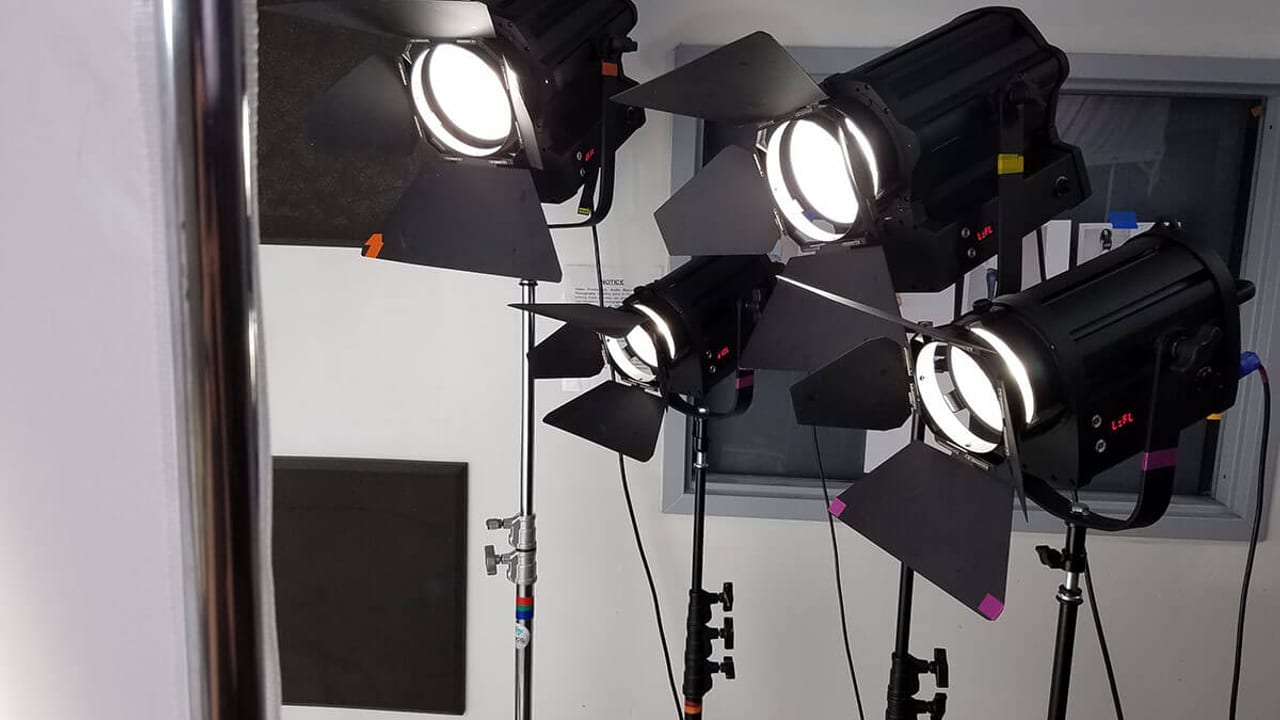
Lightstar HMIs stand out for their energy efficiency and daylight-accurate color temperature. For example, the 575W Par HMI can output light comparable to a 2k tungsten fixture but uses significantly less power, allowing more fixtures on typical 15-amp circuits. Both the 575 Par and 575 Super Spot models are dimmable and flicker-free, with five interchangeable lenses (Spot, Narrow Flood, Flood, Super Flood, Frost) and barn doors included. The Super Spot’s ballast is notably smaller and lighter, attaching directly to the yoke, which simplifies rigging and transport but does produce fan noise that might affect sound-sensitive shoots.
Lamp Handling and Safety Considerations
HMIs require careful lamp management. Lightstar fixtures do not include lamps; compatible bulbs like OSRAM and PHILIPS 575W HMI lamps cost around $150 each and last up to 1,000 hours. Plan to replace lamps at about 500 hours to maintain consistent color temperature and reduce risk of lamp failure. HMIs emit UV radiation and intense heat, so always keep the protective glass door closed during operation to shield crew and equipment. Because HMI bulbs can shatter explosively, secure mounting and protective housing are essential production safety measures.
Comparing the 575 Par and 575 Super Spot Models
Choosing between the Lightstar 575 Par and 575 Super Spot depends on your production priorities. The 575 Par offers a more robust ballast with additional controls, a swing-out door for easier lamp replacement, and quieter operation—ideal for controlled environments or dialogue-heavy scenes. The 575 Super Spot is more compact, brighter, and more budget-friendly but requires unscrewing multiple fasteners to change lamps and features a noisier ballast fan. Both models use standard industry mounts (junior combo pin for the Par, baby receiver for the Super Spot), facilitating integration with existing grip equipment.
Planning for Transport, Storage, and On-Set Use
Currently, Lightstar HMIs do not come with dedicated cases, so production teams should arrange custom or third-party protective solutions to safeguard fixtures and ballasts during transport and storage. Their relatively lightweight ballasts and compact designs ease handling, but the absence of cases means extra care is needed to prevent damage. When integrating Lightstar HMIs into your lighting package, coordinate power distribution carefully to capitalize on their energy efficiency and ensure proper circuit loading. Finally, factor in ballast noise levels during location scouting and sound planning to avoid unexpected audio challenges.
FAQ
Are Lightstar HMIs compatible with standard HMI lamps?
Yes, Lightstar HMIs use industry-standard HMI lamps such as OSRAM and PHILIPS 575W models with G22 bases. These lamps are widely available and typically cost around $150 each.
Can Lightstar HMIs be dimmed without flicker?
Both the 575 Par and 575 Super Spot Lightstar HMIs feature flicker-free dimming, making them suitable for video and film productions requiring variable light intensity.
How loud are the ballasts on Lightstar HMIs during operation?
The 575 Par ballast operates quietly, suitable for sound-sensitive environments. The 575 Super Spot ballast includes a cooling fan that produces noticeable noise, which may be problematic for dialogue scenes or quiet sets.
What should a team understand about Lighting with Lightstar HMIs?
The useful takeaway is how audience, creative direction, production choices, post-production, approvals, and delivery needs shape the final video plan.
Where should this kind of project start?
Start with the goal, audience, deadline, where the finished piece needs to live, and the practical constraints that will affect creative and production decisions.
How can ECG help with the next step?
ECG can help connect the creative idea to production planning, filming, post-production, versioning, and delivery so the finished work fits the channel and the audience.